Why the Felt Gets Busier When the Economy Gets Uglier
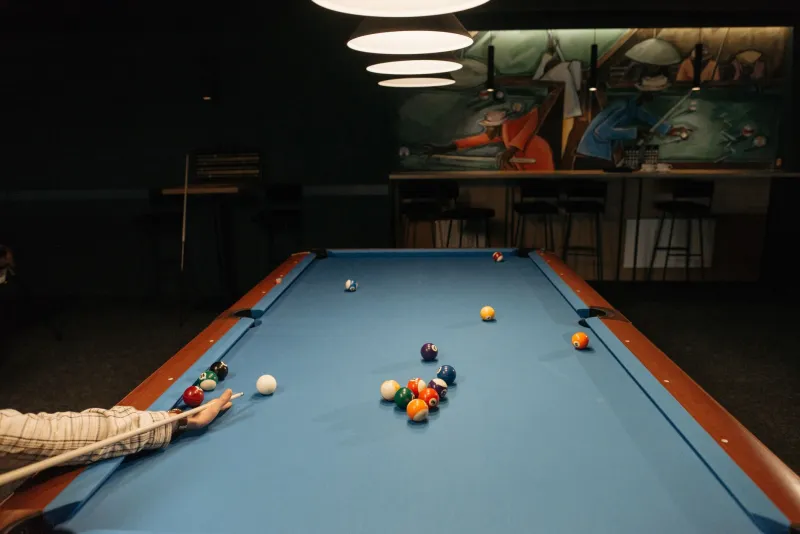
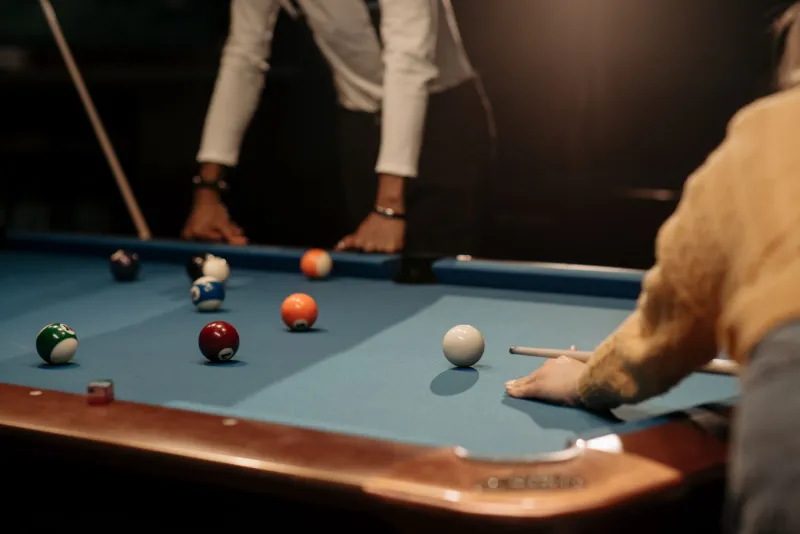
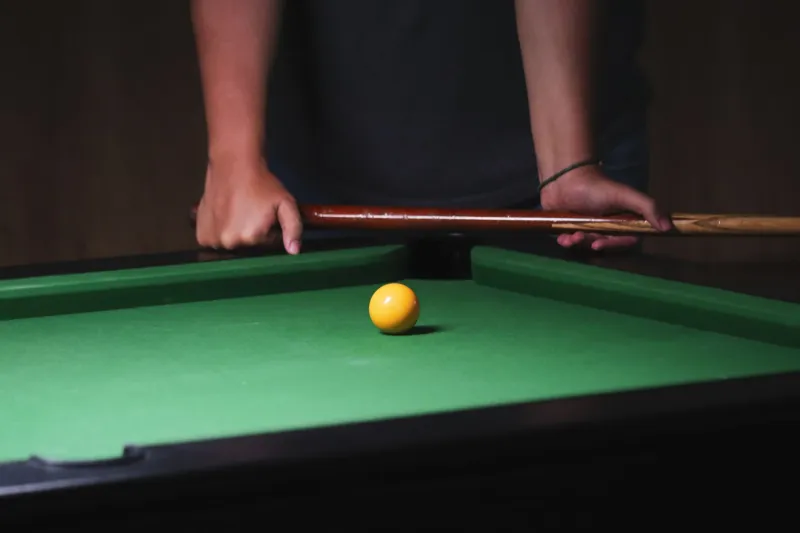
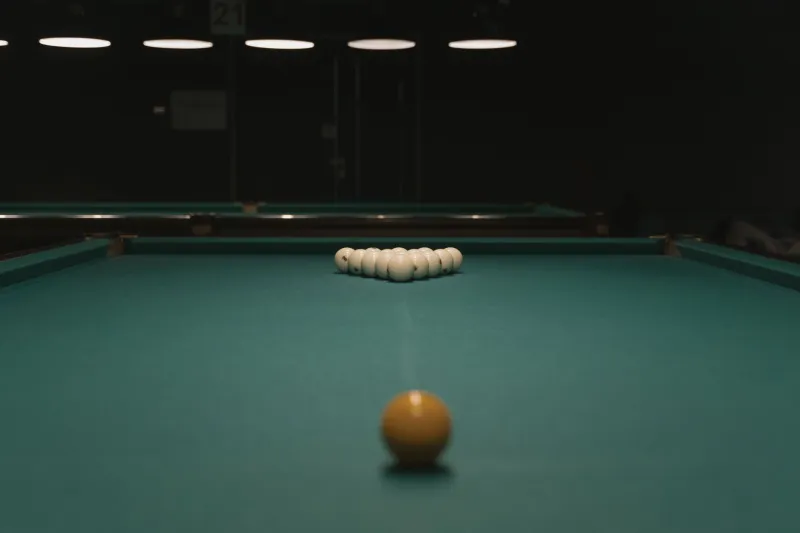
When restaurants shutter and movie theaters go dark, something interesting happens at the local pool hall — the lights stay on and the tables stay full. There's a reason pool halls have quietly outlasted recessions, pandemics, and every economic curveball the last century has thrown. It's not luck. It's structure.
Let's break down why the pool hall might just be the most recession-proof room in American entertainment.
The Lipstick Effect, But Make It Felt
Economists have a concept called the "lipstick effect" — the idea that during downturns, consumers don't stop spending on pleasure entirely. They just trade down. Instead of a $200 dinner, they buy a $12 tube of lipstick. The indulgence is smaller, but the emotional payoff is still real.
Pool halls are the lipstick effect in physical form.
When money gets tight, people don't suddenly lose the need to decompress, socialize, or feel good. They just can't justify blowing $80 per person at a trendy restaurant or $150 on concert tickets. A few hours at the pool hall? That's $15-$25 in table time, maybe a couple of beers, and you've got a whole evening. The value proposition is almost impossible to beat, and it doesn't feel like settling — it feels like a smart call.
This is fundamentally different from entertainment categories that depend on discretionary spending at a premium level. When times are hard, Broadway goes quiet. Nightclubs thin out. Upscale bowling alleys start running half-empty. But the pool hall, which was never trying to be a luxury product in the first place, barely flinches.
Low Overhead, Long Leash
From the operator's side, pool halls carry a structural advantage that most entertainment venues can't match. The core product — a table, some balls, a set of cues — doesn't spoil, doesn't require constant restocking, and doesn't depend on a supply chain that can be disrupted by inflation or shipping delays.
Compare that to a restaurant, which lives and dies by food costs, labor turnover, and the price of produce on any given Tuesday. Or a bar that needs to move product constantly to justify its square footage. A pool hall generates revenue the moment someone racks up and starts a timer. The margins on table time are clean. There's no waste, no spoilage, no "we had to comp three tables tonight because the kitchen was slow."
This means that when an economic downturn squeezes operators across the entertainment industry, pool halls have more runway. They can weather slow weeks without the same existential dread that hits a restaurant after three consecutive bad Fridays.
When People Need a Place, Not Just a Product
Here's the part that doesn't show up in the economics textbooks but matters just as much: during uncertain times, people crave belonging. Not just something to do — somewhere to be.
There's a reason the regulars at any solid pool hall will tell you the place feels like a second home. It's not the décor. It's the consistency. Same faces. Same tables. Same rhythm. When the news cycle is chaotic and everything outside feels unstable, walking into a room where you know the rules, know the people, and know exactly what kind of night you're going to have is genuinely valuable.
Restaurants and bars can offer community, but pool halls build it differently. You play with strangers. You share a table. You call your shot and somebody watching nods in appreciation. That's a social contract that forms over felt, and it's remarkably durable. People who might cut back on dining out or skip the weekend trip still show up to the pool hall — because it's not just entertainment, it's connection.
Sociologists sometimes call this the "third place" concept — the space that isn't home and isn't work, where community actually happens. Coffee shops used to fill that role. Pool halls have been filling it for over a century, through every economic cycle the country has seen.
The Skill Curve Keeps People Coming Back
Another underrated factor: pool is a game with almost infinite depth. You don't max out. A casual player who comes in twice a month is still noticing improvement after a year. Someone who plays three nights a week is still finding new angles, new patterns, new strategic wrinkles after a decade.
That skill ceiling matters economically because it means pool hall regulars don't churn the way customers at, say, an escape room or a mini-golf venue do. There's no "been there, done that" moment with pool. The game keeps giving, which means players keep coming back — and keep spending table time, even when they're watching every other dollar.
This is one reason pool hall loyalty runs so deep. The investment people make in getting better at the game creates a psychological tie to the place where they do it. Cutting out the pool hall feels like abandoning a skill you've been building — not just skipping a night out.
Recessions Don't Hit All Customers Equally
It's also worth noting that pool halls tend to serve a wide economic cross-section. On any given night, you might have a college student killing time between shifts, a tradesman unwinding after work, a mid-level manager who just needs to get out of his head, and a retiree who's been playing since the Nixon administration.
That diversity is a hedge. Venues that cater exclusively to high-income consumers get hit hard when that demographic pulls back. Venues that serve only budget-conscious crowds can struggle when those customers lose jobs entirely. Pool halls, by nature of their pricing and accessibility, capture the middle — and the middle is always there.
The table doesn't care what you do for a living. That's a feature, not a coincidence.
The Long Game
None of this means pool halls are bulletproof. Bad management, bad location, or a failure to maintain the culture that makes them worth walking into — those things can sink any venue regardless of the economic climate. But structurally, operationally, and socially, pool halls are built for the long haul in a way that most entertainment businesses simply aren't.
When everything else is closing down, the pool hall keeps the lights on. And the people who know where to find it keep showing up.
Rack 'em up. The table's always open.