After Midnight on the Felt: The Secret Economy That Runs When the Rest of the World Is Asleep
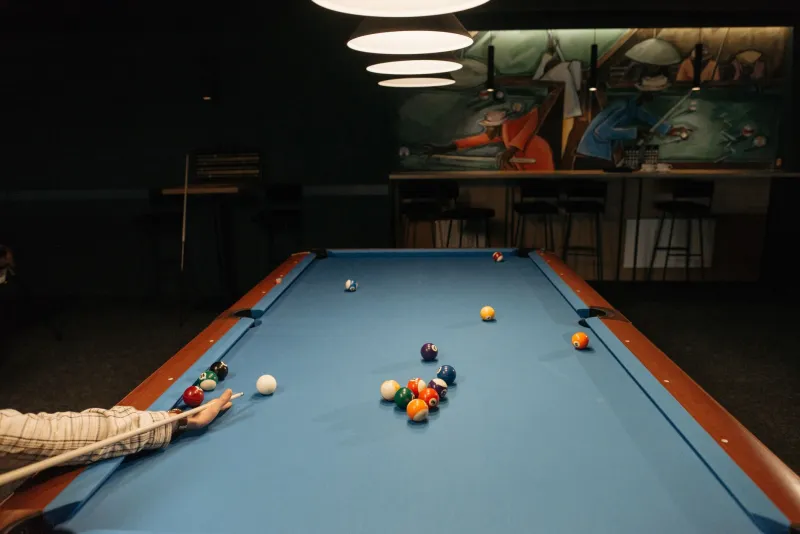
There's a version of America that most people never interact with. It runs on different hours, different rhythms, and different rules. Security guards finishing a 12-hour shift at 2 a.m. Nurses unwinding after a brutal overnight rotation. Warehouse workers, rideshare drivers, overnight stocker crews — people whose entire lives operate on a clock the rest of the country ignores. For a lot of them, the pool hall isn't just a place to play. It's the only place open that actually feels like somewhere.
And inside those late-night rooms, something quietly remarkable has been happening for decades.
The Venue That Never Really Closes
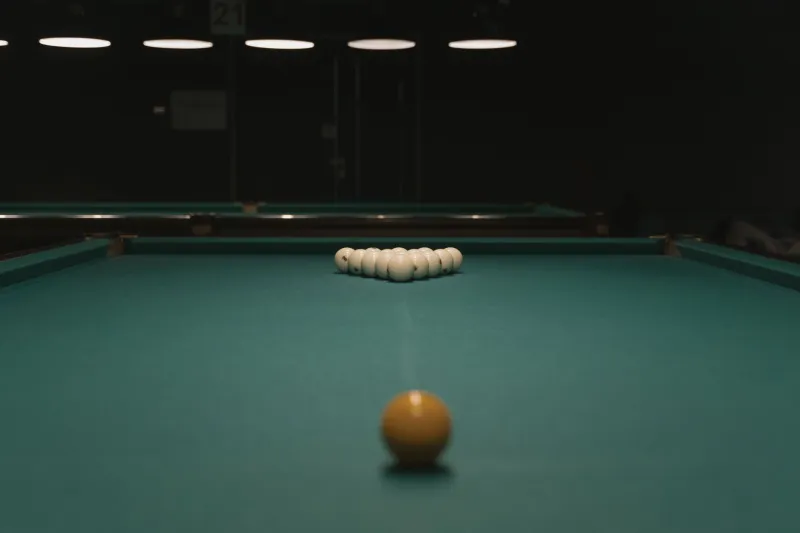
Pool halls have always had an unusual relationship with time. Unlike bars with last call or restaurants with kitchen-close, a well-run pool hall can stretch its hours deep into the night without the crowd getting rowdy or the vibe turning sour. The game itself imposes a kind of structure — you're focused, you're calculating, you're competing. That keeps things civil even at 3 a.m.
For owners who stay open late, the economics are interesting. Table fees during overnight hours tend to be lower, but the overhead drops too. Fewer staff, lower energy costs, a loyal niche crowd that tips well and causes almost no trouble. What builds up over time is something harder to quantify: trust. The same faces showing up night after night create a community that starts to function like a small, informal institution.
That institution develops its own economy.
The Lending Circle You Never Heard Of
Ask anyone who's spent serious time in a late-night pool hall and they'll tell you about the money. Not gambling money — though that exists too — but something quieter. Informal lending. Mutual aid. The kind of financial network that doesn't show up in any economics textbook but has kept more than a few people from missing rent.
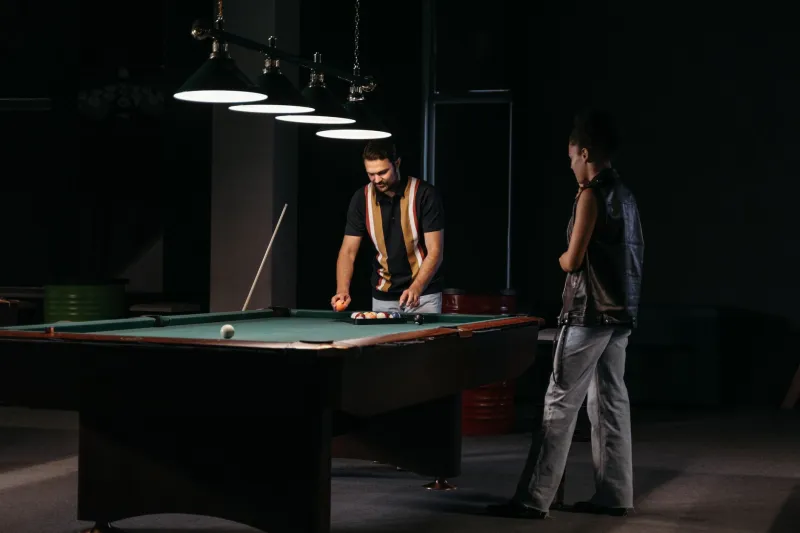
It works like this: a regular is short $60 before their next paycheck. They mention it, maybe not even directly. Someone at the next table covers it. No paperwork, no app, no interest rate. Just a handshake and the understanding that when your turn comes to be the one in a bind, the favor gets returned. These aren't strangers doing this. They're people who've racked balls together three nights a week for two years. That kind of relationship builds a credit score of its own — one measured in character instead of numbers.
This isn't unique to pool halls, but something about the environment accelerates it. You're in a room where reading people is literally part of the game. You develop instincts fast about who's reliable, who's all talk, and who you'd trust with a short-term loan. The felt teaches you more about human nature than most formal institutions ever will.
Side Hustles That Start at the Rack
The economy doesn't stop at lending. Pool halls — particularly the late-night variety — become informal marketplaces in a dozen different ways.
There's the cue repair guy who shows up every Thursday night with a bag of tools and a waiting list. The woman who does braids out of the back booth and has a six-week backlog of clients. The guy who sells homemade food out of a cooler in the parking lot and does more business between midnight and 4 a.m. than most food trucks do at lunch. None of this is advertised. All of it runs on word of mouth inside the room.
For people who work nontraditional hours, daytime services are often completely inaccessible. Banks close. Barbershops close. Even most informal service providers keep daytime hours because that's when most people need them. The overnight pool hall fills that gap without trying to. It becomes a node in a network of services that wouldn't otherwise exist for night-shift workers.
The Maintenance Crew Nobody Talks About
Then there's the infrastructure side. Pool halls don't maintain themselves, and a lot of that work happens during the hours when no one's watching.
Felt replacement, level checks on tables that have shifted over weeks of play, cue rack repairs, lighting fixes — much of this gets done in the dead hours between 4 and 8 a.m. by crews who are themselves part of the overnight economy. These aren't glamorous jobs, but they're steady, and in a lot of cities they're filled by people who've been coming to the hall as customers long enough to know the place inside and out.
There's a kind of dignity in that progression. You start as a regular. You become a trusted face. Eventually someone asks if you want to pick up some hours. It's informal hiring at its most human — built on demonstrated reliability in a room where you can't fake it for long.
Why the Pool Hall Works When Other Spaces Don't
You might ask why this all happens at a pool hall instead of, say, a 24-hour diner or a late-night gym. The answer has a lot to do with what pool actually demands from you.
A diner is passive. You sit, you eat, you leave. A gym is solitary. You're in your own world. Pool is interactive without being intrusive. You can play a full game with someone and talk the whole time, or say almost nothing and still build a rapport through the rhythm of the match. That flexibility makes it easier for people from wildly different backgrounds — different jobs, different neighborhoods, different financial situations — to share a space comfortably.
The game also creates natural conversation starters that remove the awkwardness of small talk. You don't need to explain yourself when you walk into a pool hall. You rack up, you play, and if someone wants to run a game with you, they'll let you know. It's low-pressure socialization in a world that increasingly demands you perform and project.
What Gets Built in the Dark
America's overnight economy is enormous and almost entirely invisible to people who live on daylight schedules. Millions of workers keep the country running between midnight and dawn — in hospitals, warehouses, transit systems, and security booths — and their social needs are just as real as anyone else's. They just have nowhere obvious to meet them.
The late-night pool hall has quietly filled that role for generations. Not because anyone designed it that way. Not because some entrepreneur identified an underserved demographic and built a product around them. But because the game is good, the hours are accommodating, and the people who show up in the dark tend to be exactly the kind of people worth knowing.
If you've never stayed until last table, you've only seen half the room.