Read the Room: The Unwritten Philosophy That Keeps a Pool Hall Worth Walking Into
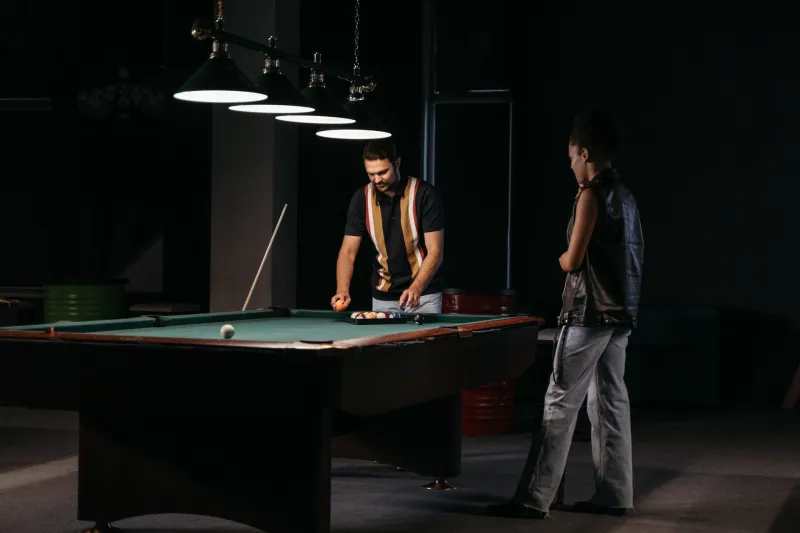
Walk into any pool hall in America and you'll notice something within the first thirty seconds. It's not the crack of a break shot or the hum of a jukebox. It's the vibe — a kind of ambient awareness that flows between players, strangers, and regulars alike. Everyone seems to know where to stand, when to speak, when to stay quiet. Nobody handed them a pamphlet. They just know.
That knowing is the code. And if you're new to the game — or if you've been playing for years and still wonder why certain rooms feel cold toward you — understanding it changes everything.
It's Not About Rules. It's About Respect.
Most venues post a short list of house rules near the front. No drinks on the rails. Pay for your time. Reserve tables through the counter. Those are logistics. The real etiquette lives somewhere deeper, in the shared understanding that a pool hall is a space — one that belongs to everyone using it at that moment.
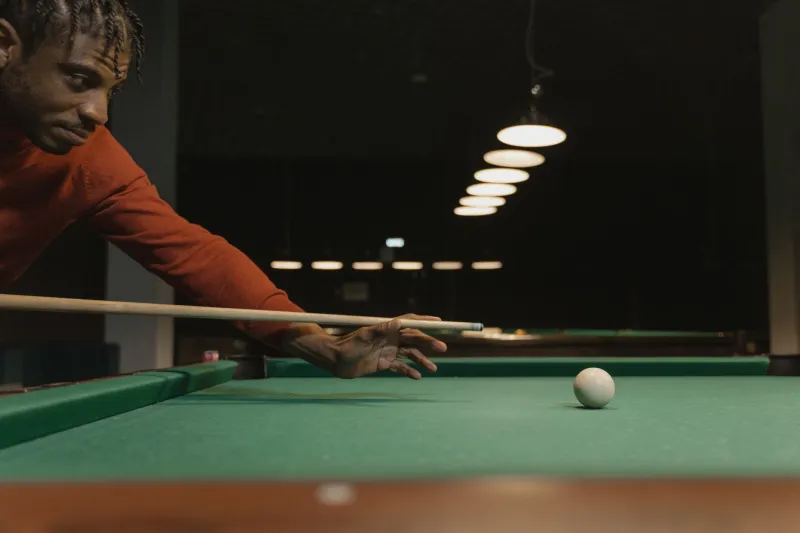
Pool is a game of concentration. The mental side of it is enormous. A well-timed distraction at the wrong moment doesn't just throw off a shot; it disrupts an entire rhythm a player might have spent an hour building. Walking directly into someone's sightline while they're mid-stance, rattling your cue against the floor during a run, hovering over a neighboring table while you wait for it to open — these aren't just minor annoyances. They're violations of something the community takes seriously, even if they never say so out loud.
The code starts with a simple principle: your presence affects everyone around you. Once you internalize that, the specific behaviors follow naturally.
The Sightline Is Sacred
If there's one rule that separates the seasoned player from the oblivious newcomer, it's this: never move through someone's line of vision when they're shooting. It sounds obvious. It's broken constantly.
Before you cross behind a table, wait. Watch. Is someone in their stance? Are they chalking up and stepping toward the table? Give it a beat. The two seconds it costs you to pause is worth infinitely more than the frustration you'd cause — and it signals to everyone in the room that you understand where you are.
This extends to spectating, too. If you're watching a match, find a spot and stay in it. Shifting around, leaning in for a better view, or narrating the shot to your buddy mid-stroke are all ways of making someone else's game about your entertainment. Good spectators are nearly invisible.
Knowing When a Table Is Actually Available
In a busy hall, table availability isn't always obvious. Someone might have stepped away to grab a drink, use the restroom, or swap out their cue. A table with balls still racked, a chalk cube sitting on the rail, or a jacket draped over a chair? That table is taken. Don't touch the balls. Don't start racking. Ask the staff if you're unsure.
On the flip side, if you're holding a table during a long break, be reasonable about it. Leaving your gear on a table for forty-five minutes while you socialize across the room is a quiet way to earn a reputation you don't want. People remember.
The Art of the Challenge
In a lot of pool halls, particularly those with a strong local scene, there's a tradition of challenging the current table winner to a game. This is one of the best parts of pool culture — it's how strangers become regulars, how skill levels get tested, how stories get made.
But there's a right way to do it. You wait until the game is finished. You make eye contact or ask politely. You don't assume the winner wants to play you just because you want to play them. If they pass, you nod and move on. Pushback, guilt-tripping, or hovering until they change their mind turns a fun tradition into an uncomfortable confrontation.
And if you win? Don't showboat. Don't over-explain your shots to the person you just beat. Shake hands, let the moment breathe, and let them decide whether they want a rematch.
Noise, Language, and the Emotional Thermostat
Pool halls are social spaces. Laughter, trash talk, and celebration are all part of the atmosphere. Nobody expects a library. But there's a difference between genuine energy and behavior that makes the whole room tense.
Loud cursing after a missed shot, slamming your cue, or going on a vocal tirade about bad luck — these things lower the temperature for everyone. It's not just about optics. It signals to other players that you're emotionally unpredictable, and unpredictable energy is contagious in tight spaces.
Keep your reactions proportionate. Missed a shot you should've made? A quiet exhale and a chalk-up is the move. Won a game you weren't supposed to win? Enjoy it without making the other person feel small. The best players in any room tend to be the calmest ones, and that's not a coincidence.
Money, Wagers, and the Handshake Standard
Friendly wagers happen. They always have. But if money is on the table — even a small amount — make sure both parties are clear before the first ball drops. Disputes about what was agreed to mid-game are awkward at best, ugly at worst. Settle the terms, shake on it, and honor the outcome. That last part matters more than people admit. Paying up quickly and without drama is one of the fastest ways to earn respect in any pool hall.
Being a Regular Worth Having
Here's the thing about the code: it's not just about avoiding bad behavior. It's about actively contributing to a space that people want to come back to. Learning the names of the staff. Greeting the regulars. Being the person who shows a newcomer the ropes without making them feel judged. Cleaning up your area before you leave. Tipping the bar.
Pool halls survive because people choose them. They choose them because of how they feel inside — the culture, the community, the sense that this is a place where something real is happening. That feeling is maintained by the people in it, one interaction at a time.
The code isn't a burden. It's an invitation. Follow it, and you don't just become a better guest — you become part of what makes a pool hall worth having in the first place.
At Bandit Billiards Club, we believe the felt is for everyone. But the code? That's what keeps it that way.