Down But Not Out: What Pool Teaches You About Fighting Back When the Game Looks Gone
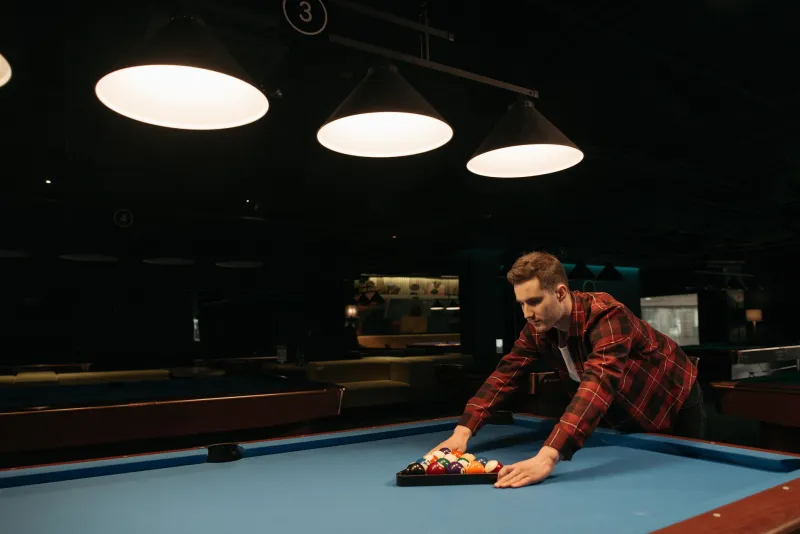
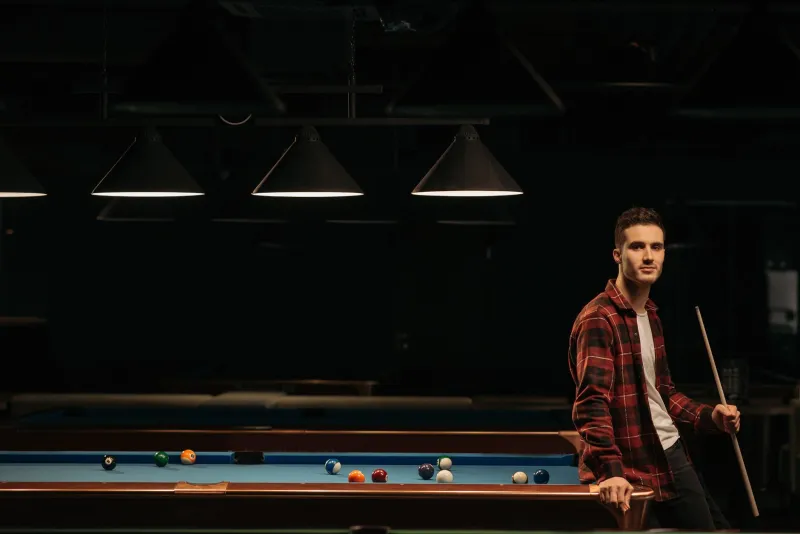
There's a specific kind of quiet that falls over a pool hall when one player is getting absolutely buried. You know the scene. The stripes are still scattered everywhere, your opponent has two solids left and is lining up the eight, and every person leaning against the rail has already mentally moved on. The match is over. Except — sometimes — it isn't.
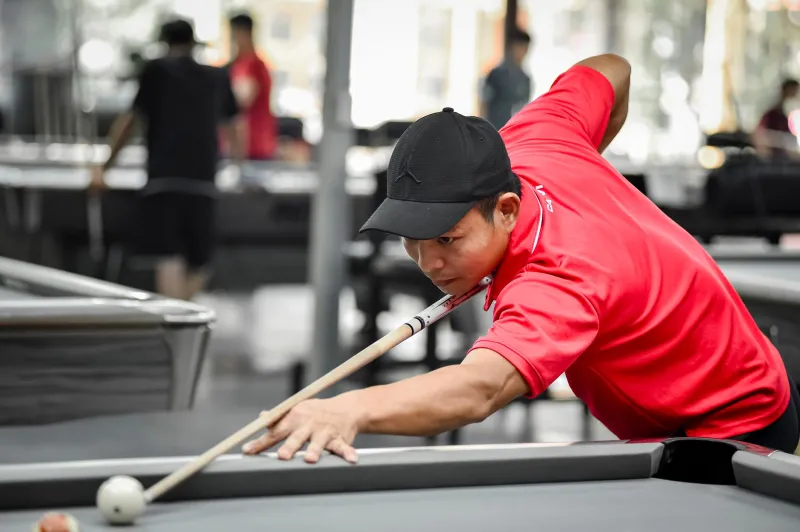
Pool is one of the few competitive games on earth where a single turn can completely reverse a story that looked finished. Not because of luck, exactly, but because of something harder to name. Call it composure. Call it pattern recognition under pressure. Call it the particular stubbornness that only comes from years of standing at a table alone with your thoughts and a cue.
Whatever you call it, players who've spent real time in pool halls will tell you: the game doesn't just reward comebacks. It trains you for them.
The Architecture of a Hole You've Dug Yourself Into
Before you can appreciate the comeback, you have to understand what being down in pool actually feels like — and why it's psychologically different from being behind in, say, a board game or a footrace.
In pool, your deficit is visible and spatial. The balls on the table are a public record of your failures. Every missed shot your opponent converted sits there, mocking you in colored resin. You're not just behind on a scoreboard. The scoreboard is the table, and everyone in the room can read it.
Marcos, a regular at pool halls in the Chicago area who's been playing eight-ball competitively for over fifteen years, describes it bluntly: "It's embarrassing in a way that other games aren't. The whole room can see exactly how bad things are for you. There's nowhere to hide."
That visibility, counterintuitively, is part of what makes pool such an effective classroom for resilience. You can't mentally minimize the gap. You have to look straight at it — and then decide what you're going to do anyway.
The Reset: One Shot at a Time
Experienced players talk about a specific mental reset that happens when you're in deep trouble. It's not optimism, exactly. It's more like a narrowing of focus so severe that the deficit stops being relevant information.
"You stop thinking about what they have and start thinking about what you need," says Denise, a women's league player out of Dallas who's been competing for nearly a decade. "One ball. Then the next one. The math works out or it doesn't, but you can't play the math. You can only play the shot."
This is, it turns out, a genuine cognitive skill — and research in sports psychology backs it up. Athletes who perform best under pressure aren't the ones who ignore the stakes. They're the ones who can acknowledge the stakes and then functionally set them aside long enough to execute the next action. Pool, with its deliberate pace and constant requirement to re-approach the table after bad turns, is almost uniquely designed to develop that skill.
Every time you walk back to the table after a rough inning, you're practicing a kind of emotional reset that has applications far beyond the felt.
What a Real Comeback Actually Looks Like
Ask anyone who's been playing pool long enough, and they'll have a story. The kind where they were down to their last ball, opponent on the eight, and somehow — through a combination of patience, geometry, and sheer refusal to fold — they ran the table.
Jamie, a bar league veteran from Nashville, remembers a tournament match a few years back where he was so far behind he'd already started thinking about what he was going to eat after the loss. "I had five balls left and she had one. I don't even know what happened. I just stopped caring about winning and started caring about the next shot. Next thing I know, I'm looking at her face and she can't believe it."
What Jamie describes is something coaches in elite sports call "process focus" — the ability to detach outcome from execution. It sounds simple. It is profoundly difficult to do in real time, under pressure, with people watching. Pool forces you to practice it constantly, because the game gives you so many opportunities to be behind.
The Lesson That Travels
Here's where it gets interesting. The mental habits pool builds don't stay at the table.
Talk to people who've played seriously for years, and a pattern emerges in how they describe handling adversity in other parts of their lives. There's a certain pragmatism. A willingness to assess a bad situation without catastrophizing it. A tendency to break overwhelming problems into smaller, more manageable actions.
Denise, who runs her own small business in addition to playing competitively, puts it directly: "When something goes sideways at work — a client falls through, a project blows up — I literally think about it the way I think about a bad rack. Okay, this is what I've got. What's the best shot from here?"
That framing — not how did I get here but what's the best move from here — is something pool players develop almost by accident, simply by showing up to the table enough times when things aren't going their way.
The Pool Hall as a Pressure Lab
There's something worth saying about the environment itself. Pool halls like Bandit Billiards Club aren't pressure-free spaces — there are other players watching, there's the ambient noise of the room, there's the unspoken social weight of every match. But they're also forgiving in a way that high-stakes competitive environments often aren't.
You can lose badly on a Tuesday night and come back on Thursday and nobody's writing about it. The stakes are real enough to matter but low enough that the lessons don't come with permanent consequences. That's the ideal environment for building resilience — enough pressure to make it meaningful, enough safety to actually learn from it.
Marcus describes it as "the best kind of losing school there is." You lose, you learn, you come back. The table resets. So do you.
Why the Comeback Matters More Than the Win
Ask most serious players which matches they remember most, and it's rarely the blowouts — the easy wins where everything went right from the start. It's the ones where they had no business winning. The matches where they were already writing their own eulogy and then somehow forgot to die.
Those are the matches that stick. And more than that, those are the matches that build something.
The win you expected teaches you very little. The win you clawed back from the edge of nowhere — that one changes how you see yourself. It revises the story you tell about what you're capable of when things go sideways.
That's the real gift pool gives you, if you play it long enough and pay attention. Not the trophies. Not even the skills, though those matter too. It's the quiet, hard-won knowledge that being down doesn't mean being done.
And that's a lesson that's worth a lot more than whatever's riding on the next game.