The Third Place Is Green Felt: Why Pool Halls Are Where Adults 35-50 Actually Want to Be
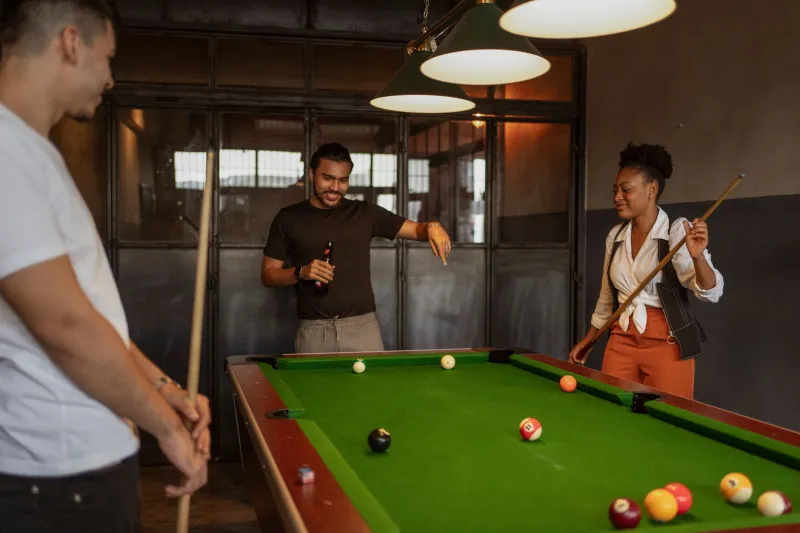
There's a sociological concept called the "third place" — somewhere that's neither home nor work, where people gather informally, build community, and just exist together without an agenda. The corner bar used to be that for a lot of Americans. So did the diner, the barbershop, the bowling alley. For decades, social scientists have been mourning the slow disappearance of these spaces, replaced by streaming services, delivery apps, and the general retreat into private life.
But walk into a well-run pool hall on a Thursday night in almost any mid-sized American city right now, and you might notice something unexpected: it's full. Not just with college kids or retirees, but with people in their mid-thirties to early fifties — the Gen X and older Millennial crowd that marketers have spent years trying to decode. They're drinking, yes, but they're also actually playing. Talking. Laughing. Staying for hours.
The pool hall, of all places, is quietly becoming the third place that generation actually wants.
Why This Age Group, and Why Now
The timing isn't accidental. Adults in the 35-to-50 range are hitting a particular life inflection point. Many have kids who are becoming more independent. Careers have stabilized enough that the frantic social climbing of their twenties has lost its appeal. And after a few years of pandemic-era isolation followed by a bar scene that somehow got louder and more expensive, a lot of people are asking a simple question: where can I actually hang out with friends without it being an event?
Pool halls answer that question in a specific way that bars and restaurants can't. When you're at a bar, you're essentially just sitting there. When you're at a pool hall, you're doing something — and that something gives the conversation a structure. You're focused enough to feel engaged, but not so focused that you can't talk. The game becomes a shared activity that makes the hangout feel purposeful without being exhausting.
Nostalgia is part of it too. A lot of people in this age range grew up playing pool. Maybe it was at a college bar, a family room table, a friend's basement. The pool hall connects to a version of themselves that felt more relaxed, more spontaneous. Walking back into that environment doesn't feel like trying something new — it feels like coming home.
What the Venues Getting It Right Have Figured Out
Not every pool hall is thriving. The ones that are have something in common: they've stopped thinking of themselves as pool halls and started thinking of themselves as social venues that happen to have pool tables.
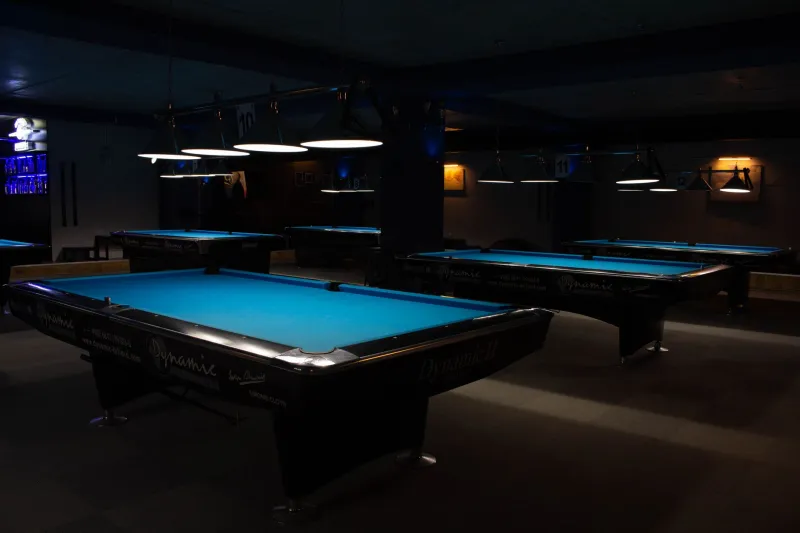
Take the venues that have invested in lighting, sound, and seating arrangements that feel more like a lounge than a 1990s sports bar. The green felt is still the centerpiece, but the surrounding environment invites you to stay. Comfortable chairs near the tables. A bar menu that goes beyond domestic bottles and mozzarella sticks. Staff who know regulars by name. These details signal that this is a place designed for adults who have options — and who chose to come here.
League nights have become particularly powerful tools for building repeat foot traffic among this demographic. A mid-week eight-ball league gives people a standing commitment that doesn't require the planning overhead of organizing a dinner party or buying concert tickets. You just show up. Your team is there. You play for a couple of hours, you have a drink, you go home feeling like you actually saw people this week.
Some venues have gone further, hosting themed events — decade nights, local band performances, charity tournaments — that give people a reason to bring friends who wouldn't normally walk into a pool hall. The goal is to lower the barrier to entry while keeping the pool at the center of the experience.
The Economic Argument Is Real
It would be dishonest to ignore the financial dimension here. Going out is expensive in 2024 in a way that still feels new and slightly insulting to people who remember when a night out didn't require a small financial commitment. Cocktail bars charge fifteen to twenty dollars a drink. Concert tickets have gotten absurd. Even dinner out for two adults can run a hundred dollars before anyone's had dessert.
Table time at a pool hall is, by comparison, genuinely affordable. A couple can spend three hours playing, have a few drinks, and walk out having spent less than the cost of a single round at a trendy cocktail bar. For a generation that's financially stretched between mortgages, childcare, and whatever's happening with the economy, that math matters.
And unlike a movie or a show, pool is interactive. You're not passively consuming something — you're participating. That feels like better value, even beyond the dollar amount.
The Community Layer That Keeps People Coming Back
The pool halls that have truly cracked the code aren't just offering affordable entertainment. They're offering belonging — and that's a harder thing to manufacture.
It happens through consistency. The same bartender who's been there for four years. The Tuesday night regulars who've been playing in the same weekly game for two seasons. The inside jokes that develop between people who've watched each other win and lose over dozens of sessions. These are the things that turn a venue into a community, and they can't be designed from scratch — they have to grow.
What good venues do is create the conditions for that growth. They hire staff who like people. They build leagues that bring the same players back week after week. They remember your name. They don't rush you off a table when you're on a roll. They make you feel like a regular even before you technically are one.
That's the third place working exactly the way it's supposed to. Not as a transaction, but as a relationship.
The Comeback Is Real, But It's Earned
Pool halls aren't experiencing a resurgence because of some algorithmic trend or a celebrity endorsement. They're coming back because they offer something genuinely hard to find right now: a low-pressure, affordable, activity-centered social space where adults can be themselves without performing for anyone.
Gen X and Millennials didn't rediscover pool halls because they were told to. They found their way back because the alternative — staying home, scrolling, ordering in — stopped feeling like enough. People want to be in rooms with other people. They want to do something with their hands. They want to be somewhere that has a little personality and doesn't require a reservation.
The pool hall, at its best, is all of that. And the spots that understand what they actually are — not just a place to shoot pool, but a place to belong — are the ones with a line at the door on a Wednesday night.
Rack 'em up. Your people are already here.