Eight Ball, Nine-Ball, or One Pocket? Here's How to Pick Your Game
First Rule: There's No Wrong Starting Point
Before we get into the specifics, let's clear something up. There's no hierarchy here. Eight ball isn't for beginners and one pocket isn't just for pros. Every game on this list has its own rhythm, its own learning curve, and its own community of players who swear it's the best thing happening on felt. Your job is to figure out which one clicks for you.
Let's break them down.
Eight Ball: The Game Everyone Knows (Sort Of)
Difficulty level: Beginner-friendly, with serious depth for advanced players
Best for: New players, casual hangouts, large groups
Eight ball is the one most people have played at some point — at a backyard barbecue, a college bar, a cousin's basement. It's the default setting of American pool culture, and for good reason: the basic concept is simple enough to explain in two minutes.
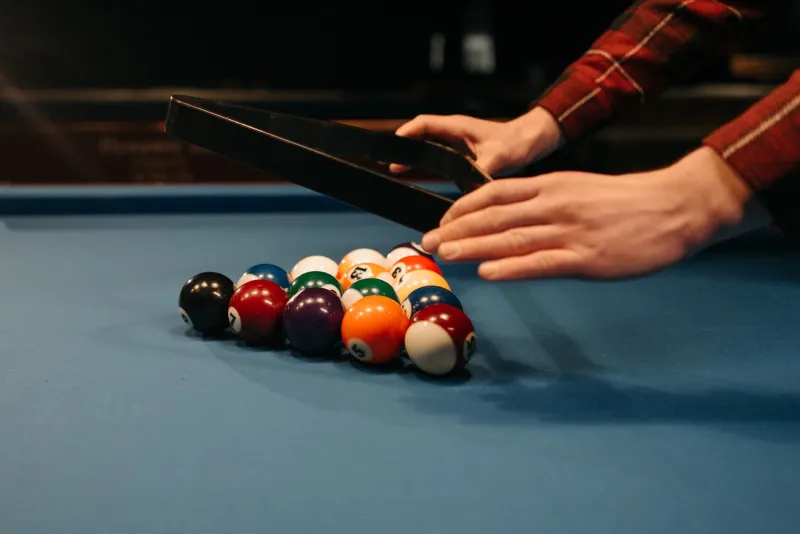
You've got 15 balls split into two groups — solids (1–7) and stripes (9–15). One player shoots solids, the other shoots stripes. Pocket all of yours, then legally sink the eight ball to win. That's the skeleton of it.
Here's the thing, though: eight ball has layers. The rules around the eight ball itself — when you can shoot it, what counts as a legal shot, what happens on a scratch — vary depending on whether you're playing bar rules, BCA rules, or APA rules. Walking into a new venue and assuming everyone plays the same way is how arguments start. When in doubt, ask before you break.
What makes it great: Eight ball is genuinely fun at every skill level. Two beginners can have a blast. Two experienced players can have a deeply strategic match. The game scales.
Starting tip: Learn the rules for wherever you're playing before the first ball drops. And focus early on learning to control where the cue ball ends up after each shot — that's where the real game begins.
Nine-Ball: Fast, Sharp, and Unforgiving
Difficulty level: Moderate to advanced
Best for: Players who want a faster game, competitive environments, one-on-one matches
Nine-ball is what you see on TV. It's the game of professional pool tournaments, ESPN broadcasts, and the kind of high-stakes matches that make for great bar stories. And it plays completely differently from eight ball.
Only nine balls are on the table (1–9). You must always hit the lowest-numbered ball on the table first, but you can pocket any ball on the same shot. Whoever sinks the nine ball wins — regardless of how many balls they've pocketed before that.
This creates a game that's simultaneously simpler and more demanding than eight ball. There are fewer balls, but the requirement to always contact the lowest ball first means you can't just shoot at whatever looks good. Every shot requires you to think about sequence, position, and what happens next. Miss your position and you hand your opponent a gift.
Nine-ball rewards players who can run racks — string together multiple shots in a single inning — and punishes defensive lapses harshly. A good player can clear the table before you touch a ball.
What makes it great: The pace. Nine-ball moves fast, which keeps things exciting. It's also the game where you'll really start to appreciate cue ball control, because position play is everything.
Starting tip: Don't worry about running racks right away. Focus on always knowing which ball you need to hit first and making safe, legal shots. The strategy builds from there.
One Pocket: The Chess Match on Felt
Difficulty level: Advanced
Best for: Experienced players, serious students of the game, those who love strategy over speed
One pocket is where pool gets genuinely complex. It has a devoted following among serious players and a reputation as the purest test of pool intelligence available. It is also, fair warning, not the most beginner-friendly experience.
Here's the setup: each player is assigned one of the two corner pockets at the foot of the table. You score points only by pocketing balls in your designated pocket. First to eight balls wins. Every other pocket on the table? Doesn't count for either of you.
This completely changes the geometry of the game. Suddenly, you're not just trying to make shots — you're trying to control where balls end up, keep them away from your opponent's pocket, and set traps that force them into bad positions. Offense and defense blur together. A great one pocket player might spend entire innings doing nothing but moving balls around the table strategically, never once attempting a scoring shot.
What makes it great: Depth. One pocket rewards patience, creativity, and a deep understanding of how balls move. Players who love strategy — the kind of people who think three moves ahead — often find that one pocket is the game they've been waiting for.
Starting tip: Watch before you play. Seriously. Find a one pocket match at your local hall and just observe for a while. The game will start making sense, and you'll pick up on the logic before you ever pick up a cue.
A Quick Comparison
| Game | # of Balls | Pace | Strategy Depth | Best Starting Point? |
|---|---|---|---|---|
| Eight Ball | 15 | Medium | Medium-High | Yes |
| Nine-Ball | 9 | Fast | High | With some basics |
| One Pocket | 15 | Slow | Very High | After experience |
So Which One Should You Start With?
If you've never played pool before, start with eight ball. It's accessible, widely played, and will teach you the foundational skills — stance, stroke, aiming, basic position play — that translate directly into every other game.
Once you've got some time on a table and you're comfortable making balls consistently, try nine-ball. It'll sharpen your thinking about sequences and cue ball control in a hurry.
When you're genuinely hooked and want something that'll challenge you for years? That's when one pocket starts calling your name.
The good news is that Bandit is the kind of place where you can explore all three. There's always someone around willing to walk you through a new game, and no one's going to make you feel dumb for asking how the rules work. That's kind of the whole point of being here.
Rack 'em up and figure out which game is yours.