Turn It Down (Or Don't): The Surprising Way Your Pool Hall's Soundtrack Is Messing With Your Shot
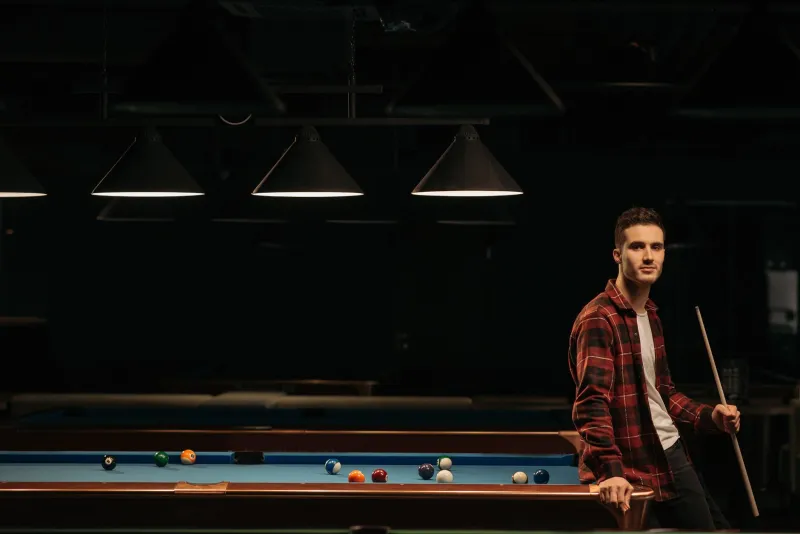
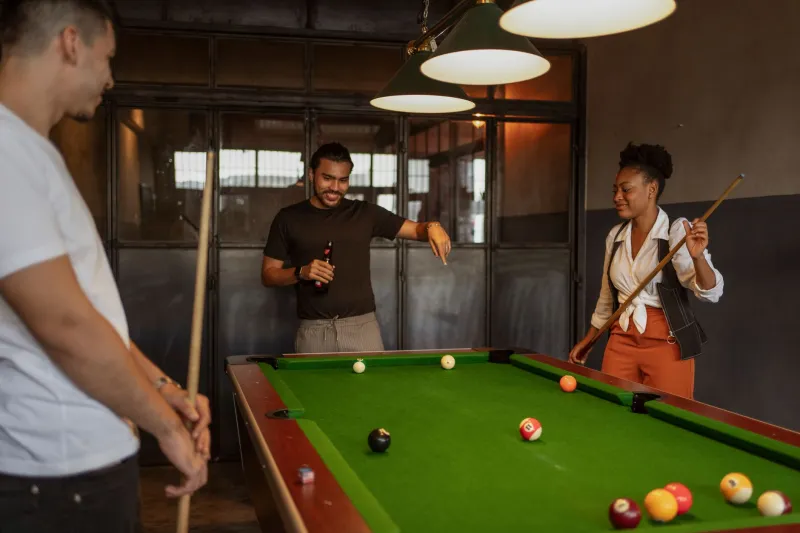
Walk into almost any pool hall in America and you'll notice the music before you notice anything else. Maybe it's classic rock bleeding out of a jukebox near the bar. Maybe it's a playlist somebody built on Spotify in 2019 and never updated. Maybe it's whatever the bartender felt like throwing on after their shift started. Nobody really thinks about it that hard — and that's exactly the problem.
Because the music playing in your pool hall isn't just vibes. It's actively shaping how you play.
Your Brain at the Table Is Already Doing a Lot
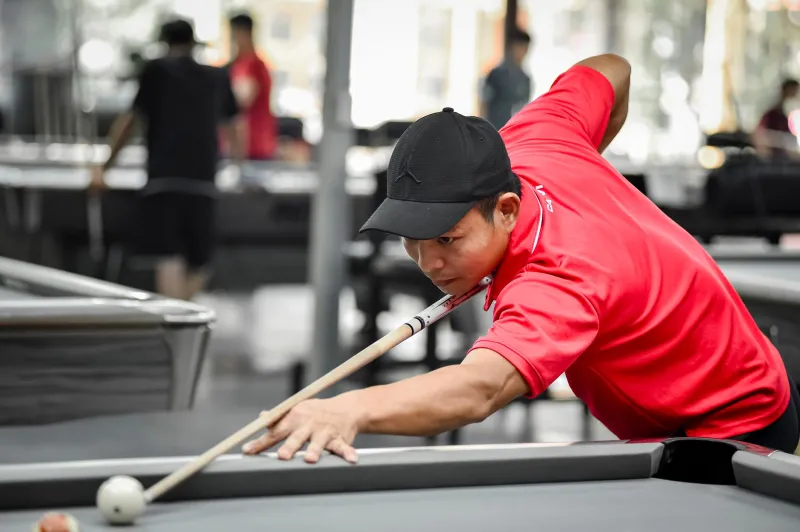
Here's the thing about pool that casual players don't always appreciate: it's a precision sport dressed up as a bar game. When you're lining up a cut shot or calculating how much English to put on the cue ball, your brain is running a quiet but intense operation — processing angles, estimating speed, coordinating muscle memory, and managing nerves all at once.
Noise interferes with that process in ways that aren't always obvious. Research in cognitive psychology has long established that auditory distraction degrades performance on tasks requiring sustained attention and fine motor control. Pool checks both of those boxes. A sudden spike in volume — a dropped glass, a loud laugh, a song kicking in at full blast — can interrupt your pre-shot routine at exactly the wrong moment. And once your rhythm is broken, it's harder to get back than most players admit.
But it's not as simple as "quiet equals better." Complete silence brings its own problems. Without ambient sound to absorb into the background, every little noise becomes a disruption. The click of a cue ball sounds like a gunshot. You start hearing your own breathing. Some players actually focus worse in dead silence because the absence of noise becomes its own kind of distraction.
The sweet spot, it turns out, is somewhere in the middle — and most pool halls aren't hitting it.
What Venue Owners Get Wrong
Talk to enough pool hall operators and a pattern emerges. Music decisions at most venues are made almost entirely on vibe and convenience, with zero thought given to the actual gameplay experience.
"We basically just let the jukebox do what it does," admitted one pool hall manager in Nashville who asked to stay anonymous. "People put in their dollars, they play what they want. Some nights it's country, some nights it's hip-hop, some nights somebody goes on a classic rock binge for two hours. We never really thought about whether it was affecting the players."
That hands-off approach makes sense from a hospitality standpoint — give customers control, let them enjoy themselves. But it creates an acoustic environment that swings wildly in tempo, volume, and energy throughout the night. For casual players just hanging out, that's fine. For anyone trying to actually improve their game or compete seriously, it's a real obstacle.
High-tempo music — think anything above 120 BPM — tends to accelerate decision-making in ways that don't serve precision sports. You rush your approach. You shorten your pre-shot routine. You pull the trigger before you've fully committed to the shot. Fast music makes you feel like you should be moving faster, even when the table is telling you to slow down.
Low-tempo music does the opposite, but it has its own trap: it can make players too relaxed, too loose, too slow to respond when the table demands quick thinking on a safety play or a time-sensitive shot decision.
The Genres Worth Paying Attention To
So what actually works? Competitive players have opinions, and they're more consistent than you might expect.
Jazz — particularly instrumental jazz at moderate tempo — comes up again and again. It fills space without demanding attention. The rhythmic complexity keeps the brain lightly engaged without pulling focus away from the table. A lot of serious players say they actually shoot better with jazz in the background than with anything else.
Ambient and lo-fi music lands in a similar zone. The lo-fi hip-hop wave that took over study playlists a few years back? Turns out it's not just good for cramming for finals. The consistent, low-stimulation soundscape it creates is close to ideal for sustained concentration. Several competitive players we spoke with said they listen to exactly this kind of music when they're practicing alone.
Classic rock is the great mixed bag. Mid-tempo classic rock — your Fleetwood Mac, your Tom Petty — tends to be benign, even helpful. High-energy rock and anything with aggressive percussion is where things get dicey. Volume matters here more than genre: a song you love at a reasonable level can become a genuine problem when it's cranked up.
Electronic dance music is almost universally bad for serious play. The driving tempo, the builds, the drops — all of it triggers an urgency response in the brain that runs directly counter to what good pool requires. This isn't about taste. EDM fans can absolutely love the music and still shoot worse when it's playing.
What the Table Actually Needs From You
Good pool requires something that's surprisingly rare in modern life: a genuinely calm, focused mind operating in real time. You need to be present enough to read the table, relaxed enough to execute without tension, and alert enough to adapt when something unexpected happens.
Sound engineers who work in sports performance environments talk about "cognitive load management" — the idea that your brain has a finite amount of processing power, and anything pulling at it unnecessarily is stealing from your performance. A chaotic sonic environment is constantly pulling at you, even when you don't consciously notice it.
The best pool halls understand this intuitively, even if they've never framed it in those terms. The ones that get it right tend to keep music at a consistent, moderate volume. They favor instrumental or low-lyric tracks. They avoid dramatic tempo swings between songs. They treat the audio environment as part of the overall experience design, not an afterthought.
What We'd Love to See More Venues Try
Here's an idea that almost no pool halls are doing but should be: time-block the playlist. Early evening, when it's casual and social, play something with more energy and personality. Late night, when the serious players take over the back tables, shift to something lower-key. You don't have to make it complicated — two playlists, a transition time, done.
Some venues in larger cities have started experimenting with designated "quiet pool" hours, borrowing the concept from bowling alleys that offer similar programming. The response from regulars has been surprisingly positive, particularly among players in their 30s and 40s who show up specifically to work on their game.
At Bandit Billiards Club, we think about this stuff because we believe the environment you play in matters as much as the equipment you use. The table, the lighting, the chalk, the cue — and yes, the music. Every element either helps you play your best or works against you.
Next time you're shooting and something feels off, take a second before you blame your stroke. Listen to what's playing. It might be telling you something.