Putting Down the Phone, Picking Up a Cue: Why Gen Z Is Falling Hard for Pool Halls
The Last Place You'd Expect to Find Gen Z
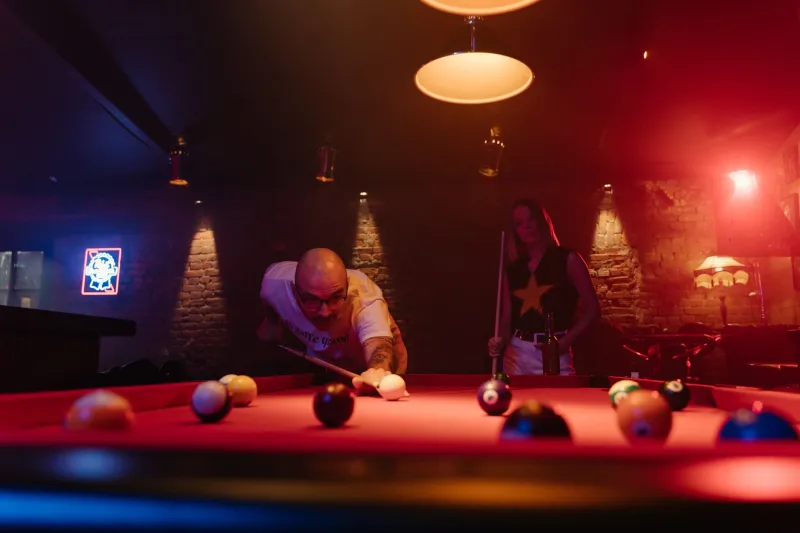
Walk into Bandit Billiards Club on a Friday night and take a look around. You'll see people in their early twenties, phones face-down on the rail, genuinely locked into a game of eight ball. No filters, no content to consume — just the satisfying crack of a break shot and a round of trash talk between friends. It's not a throwback. It's actually becoming a trend.
Across the country, pool halls that spent years worrying about survival are now fielding questions about wait times and reservations from customers who weren't even born when the last billiards boom happened in the '90s. Gen Z — broadly defined as those born between the late '90s and early 2010s — is quietly becoming one of the most reliable demographics walking through the door. And the reasons why say a lot about where this generation actually is right now.
Analog in a Hyper-Connected World
Here's the irony that nobody saw coming: the most digitally native generation in history is increasingly craving experiences that can't be replicated on a screen. After years of social media, streaming, and gaming that delivers instant stimulation with zero physical stakes, a lot of younger people are actively seeking out activities that require their hands, their bodies, and their full attention.
Pool delivers all three. There's a tactile satisfaction to it that's genuinely hard to describe until you feel a perfectly executed draw shot pull the cue ball back across the table exactly where you planned it. It's physical. It's spatial. It's real in a way that a ranked match in an online game simply isn't. You can't rage-quit a pool table. You have to stand there, figure out what went wrong, and try again.
For a generation dealing with serious screen fatigue — and researchers are increasingly documenting that Gen Z reports higher rates of burnout from digital consumption than older cohorts — the appeal of an evening that's genuinely unplugged has serious pull. Pool halls offer something increasingly rare: a reason to put the phone away without feeling like you're missing anything.
It's Social, But Not Performative
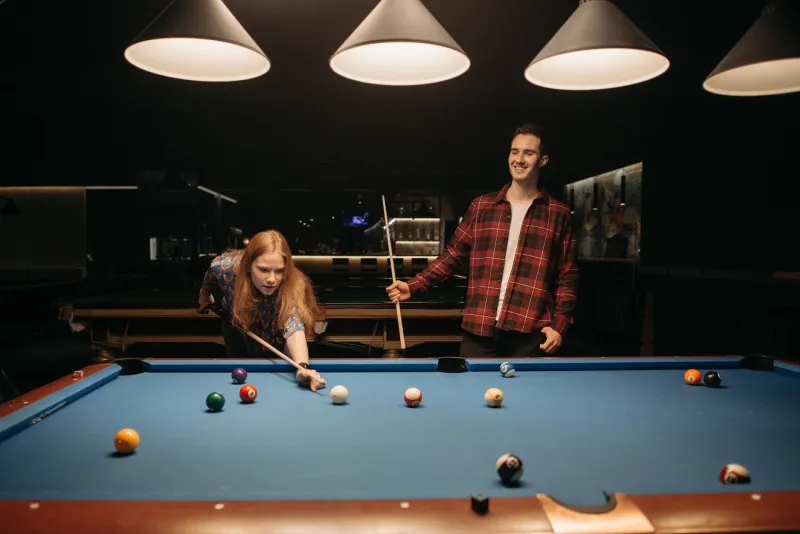
There's another dimension to this that goes beyond the game itself. Pool is inherently social, but in a low-pressure way that a lot of younger players find refreshing. You're not staring across a dinner table trying to make conversation. You're not at a loud bar trying to shout over a DJ. You're playing a game together, which gives the interaction structure and something to actually talk about.
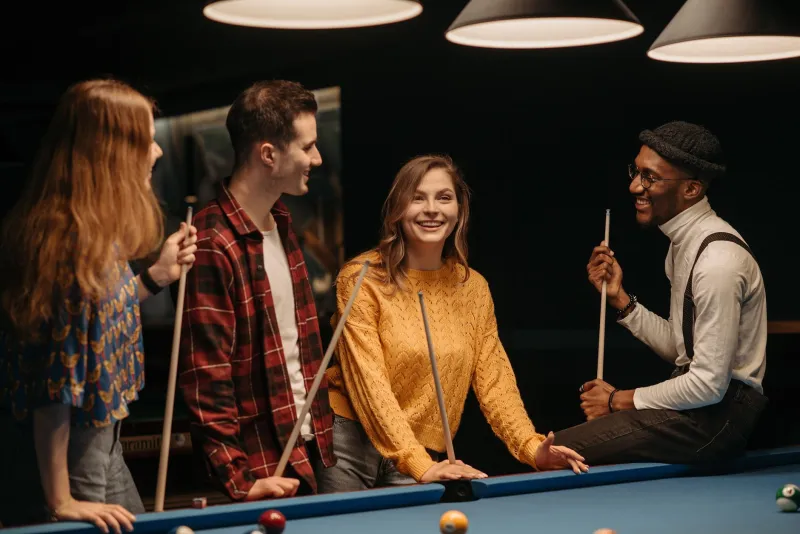
That dynamic — what sociologists sometimes call "side-by-side" socializing — turns out to be incredibly appealing to a generation that's been told for years it doesn't know how to connect in person. Pool makes connection easy because the game does the heavy lifting. You laugh about a bad shot. You give props when someone runs a rack. You argue about whether that eight ball was really a scratch. Before you know it, you've spent three hours with people and it didn't feel like effort.
Modern pool halls have gotten smart about leaning into this. Venues are ditching the grimy, fluorescent-lit aesthetic of the old-school hall and replacing it with environments that feel genuinely inviting — warm lighting, good food menus, craft beer lists, and music that doesn't make you feel like you wandered into 1987. The game stays the same, but the container around it has evolved.
The "Third Place" Problem Gen Z Is Solving
Urban planners and sociologists have talked for years about the decline of the "third place" — somewhere that's not home, not work, and not a commercial transaction you're expected to rush through. Coffee shops sort of fill the role, but they're increasingly designed for laptop work, not lingering. Bars require you to drink. Gyms are solitary.
Pool halls are, almost accidentally, one of the best third places left standing in America. You can show up solo and find a game. You can come with a crew and book a table for the whole night. You can become a regular and actually know the people around you. The social architecture of a pool hall rewards showing up consistently, which is the foundation of any real community.
Gen Z, for all the cultural narrative about them being isolated and online, is actively hunting for exactly this kind of space. They want somewhere to belong that isn't mediated by an algorithm. Pool halls, at their best, offer that.
How Smart Venues Are Meeting the Moment
The pool halls winning right now aren't just relying on nostalgia or the novelty factor. They're actively building programming that makes sense for younger players. League nights with beginner-friendly formats. "Learn to Play" sessions that strip away the intimidation factor for first-timers. Social media presence that shows real people having real fun — not polished ads, but actual Friday nights caught on someone's phone.
Here at Bandit, we've seen it firsthand. Beginner nights that started small have grown into standing-room events. The demographic mix has genuinely shifted. And what's interesting is that the older regulars — the guys who've been playing for decades — mostly love it. There's something about a younger player asking a veteran to show them how to properly hold a cue that keeps the culture alive in a way no marketing campaign ever could.
The Cue Isn't Going Anywhere
The pool hall renaissance isn't a flash in the pan. It's the result of a real, documented shift in how younger Americans want to spend their free time — more tangible, more social, more present. Billiards, with its combination of skill, strategy, and genuine human interaction, is perfectly positioned to catch that wave.
The screens will still be there when the night's over. But for a few hours around a felt table, with chalk on your fingers and a cold drink in your hand, they can wait.