Break or Be Broken: What Elite Players Know About the Opening Shot That You Don't
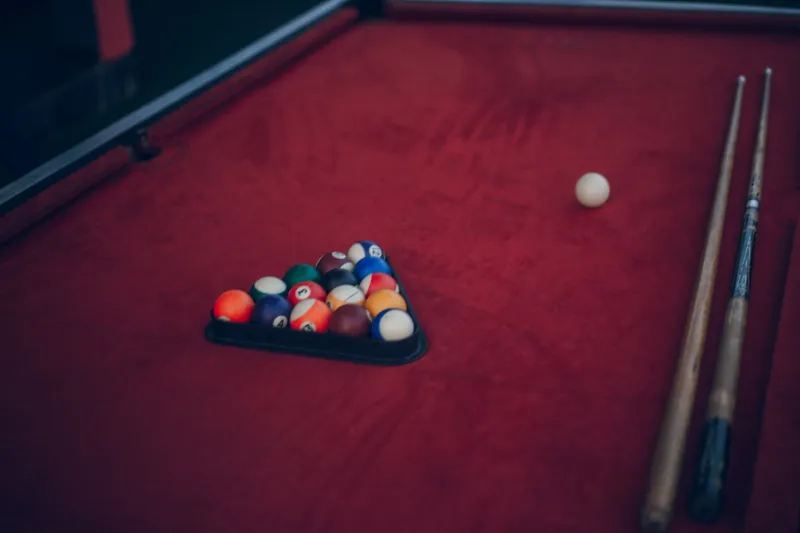
There's something almost theatrical about the opening break in a game of pool. The room gets a little quieter. Everyone at the surrounding tables glances over. Then — crack — the rack explodes and balls scatter across the felt like they've got somewhere urgent to be.
But here's the thing: most recreational players treat the break like a chance to show off how hard they can hit. Spoiler alert — that's not what a good break is about. Not even close.
We got into it with a few competitive players and a coach who's seen thousands of breaks, good and bad. What they told us might change the way you think about the opening shot entirely.
The Physics Nobody Explains to You
Let's start with the science, because it actually matters here.
When the cue ball contacts the head ball in a racked set, energy transfers through the rack in a chain reaction. The goal isn't to launch the cue ball as fast as humanly possible — it's to transfer maximum energy into the rack while maintaining cue ball control after contact.
Think of it like a car crash in slow motion. A big, heavy impact that sends energy in one clean direction is far more effective than a wild, off-center swing. Pool physics reward precision over raw power every single time.
The cue ball's speed at contact matters, sure. But so does the angle of approach, the point of contact on the head ball, and — critically — what the cue ball does after the hit. An out-of-control cue ball scratching in the corner pocket isn't a good break, no matter how loud it sounded.
The Most Common Mistake at the Table
Coach and longtime competitive player Marcus Delray, who runs clinics out of a billiards hall in Nashville, puts it plainly: "The number one mistake I see is people gripping the cue like they're trying to choke it to death. They tense up, they lunge, and they lose all their mechanics at the moment of contact."
That tension is the enemy. A tight grip restricts the fluid pendulum motion your arm needs to generate real speed. Ironically, the players who look the most relaxed at the break are usually the ones generating the most cue ball velocity — because their stroke is clean and uninterrupted.
The second most common mistake? Breaking from the wrong position. Many casual players line up dead center behind the head string, which sounds logical but actually limits your control over where the cue ball ends up. Elite players often break from just off-center — closer to the side rail — because it gives them a better angle to drive the cue ball back toward the middle of the table after contact.
How the Pros Think About It
Competitive 9-ball and 8-ball players approach the break with a specific outcome in mind before they ever step up to the table. They're not just trying to scatter balls — they're trying to pocket a ball on the break (ideally the wing ball in 9-ball, or a corner ball in 8-ball), keep the cue ball somewhere near the center of the table, and avoid scratching.
That's three separate objectives happening simultaneously on one shot. Achieving all three consistently requires a repeatable, grooved stroke — not a different all-out effort every single time.
"I break the same way every time," says Jenna Kowalski, a regional 8-ball competitor based out of Chicago. "Same stance, same grip pressure, same follow-through. The rack changes, the rolls change, but my mechanics don't. That consistency is what separates a good break from a lucky one."
Breaking Down Your Setup
Here's where we get into the stuff you can actually use the next time you're racking up at Bandit.
Stance: Get low, get balanced, and keep your bridge hand steady. Your back foot should be slightly wider than shoulder-width to give you a stable base when you drive through the shot.
Grip: Light but controlled. Think of it like holding a bird — firm enough that it doesn't fly away, gentle enough that you're not crushing it. Your grip should tighten slightly at the moment of contact, not before.
Bridge length: Shorter than you think. A lot of players extend their bridge too far, which reduces control. Keep your bridge hand about six to eight inches from the cue ball.
Contact point: Aim to hit the cue ball just slightly below center. A touch of draw will help pull the cue ball back toward the middle of the table after it contacts the rack, which is exactly where you want it.
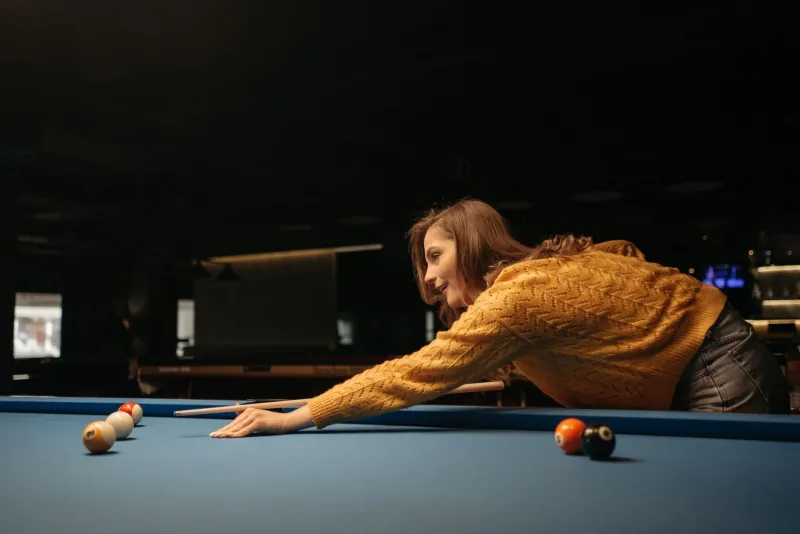
Follow-through: Don't stop your stroke at contact. Drive through the cue ball like it isn't even there. A full, complete follow-through is what separates a punchy, choppy break from a smooth, powerful one.
Speed vs. Power — Know the Difference
Here's a concept that trips people up: speed and power are not the same thing in pool. Power is about energy transfer. Speed is just one component of that equation.
A cue ball traveling 25 mph that contacts the head ball dead-on, with a clean, level stroke, will break more effectively than a cue ball going 30 mph that's struck slightly off-center with a rising cue tip. The off-center hit wastes energy, introduces unwanted spin, and leaves you with a cue ball that's hard to predict.
Practice breaking at maybe 80 percent of your maximum speed and focus on hitting the head ball perfectly. You'll be shocked at how much more satisfying — and effective — your break becomes.
Put It Into Practice
Next time you're here, grab a table during open play and spend the first ten minutes just working on your break. Rack 'em, break, and pay attention to where the cue ball ends up. Middle of the table? Good. Rail or pocket? You've got some adjusting to do.
The break is the first shot of every game. It sets the tone, it can immediately shift momentum in your favor, and it's one of those skills that pays dividends across every format — casual 8-ball with friends, league nights, or weekend tournaments.
Get it right, and everything that comes after gets a little easier.